Calling in to share a story on live radio or participating as a guest on a podcast is an exciting way to express your perspective. However, appearing on digital broadcasting platforms introduces distinct privacy risks. Understanding the underlying data collection mechanisms from what you speak directly into the microphone to the hidden technical footprints left on hosting servers empowers you to maintain control over your personal data before raising your voice.
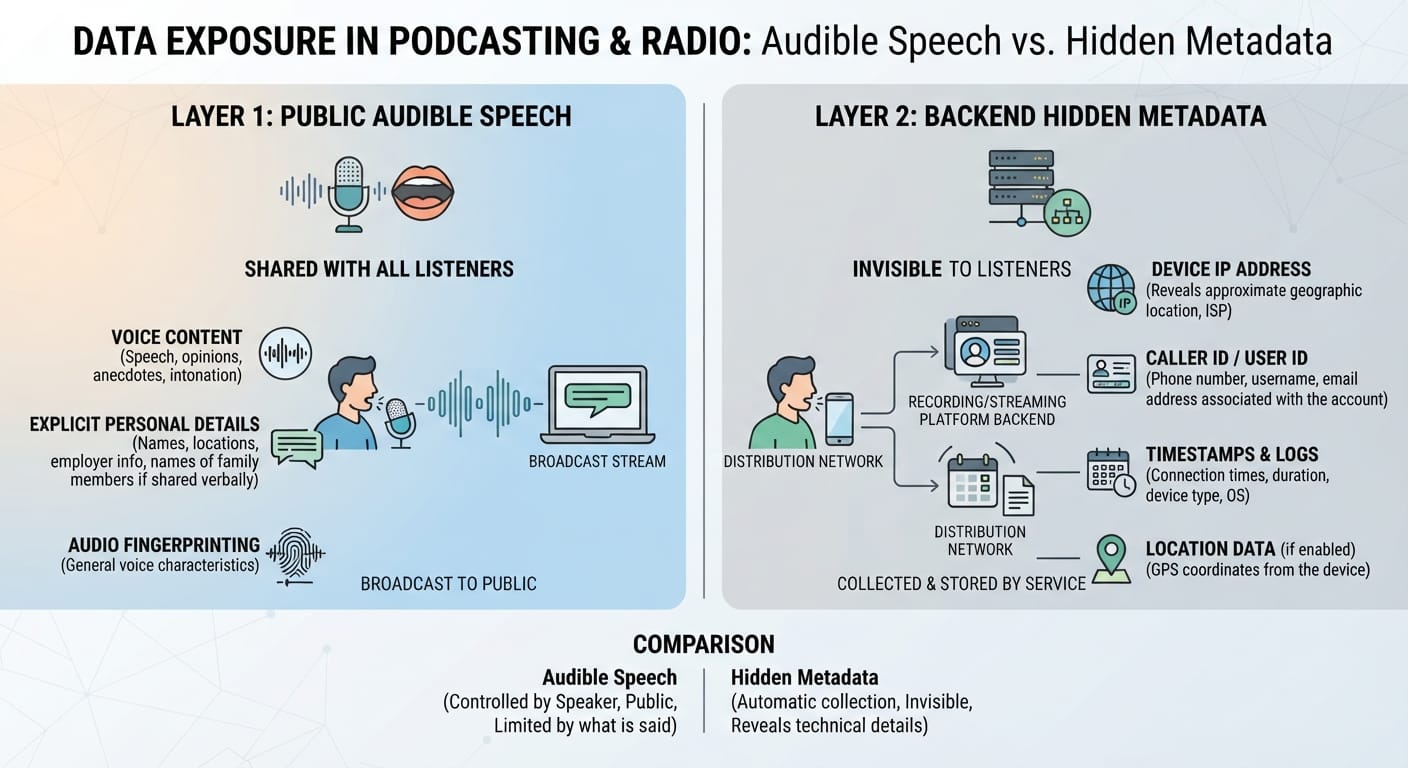
Two Layers of Personal Data Exposure: Public Audio vs. Hidden Backend Metadata
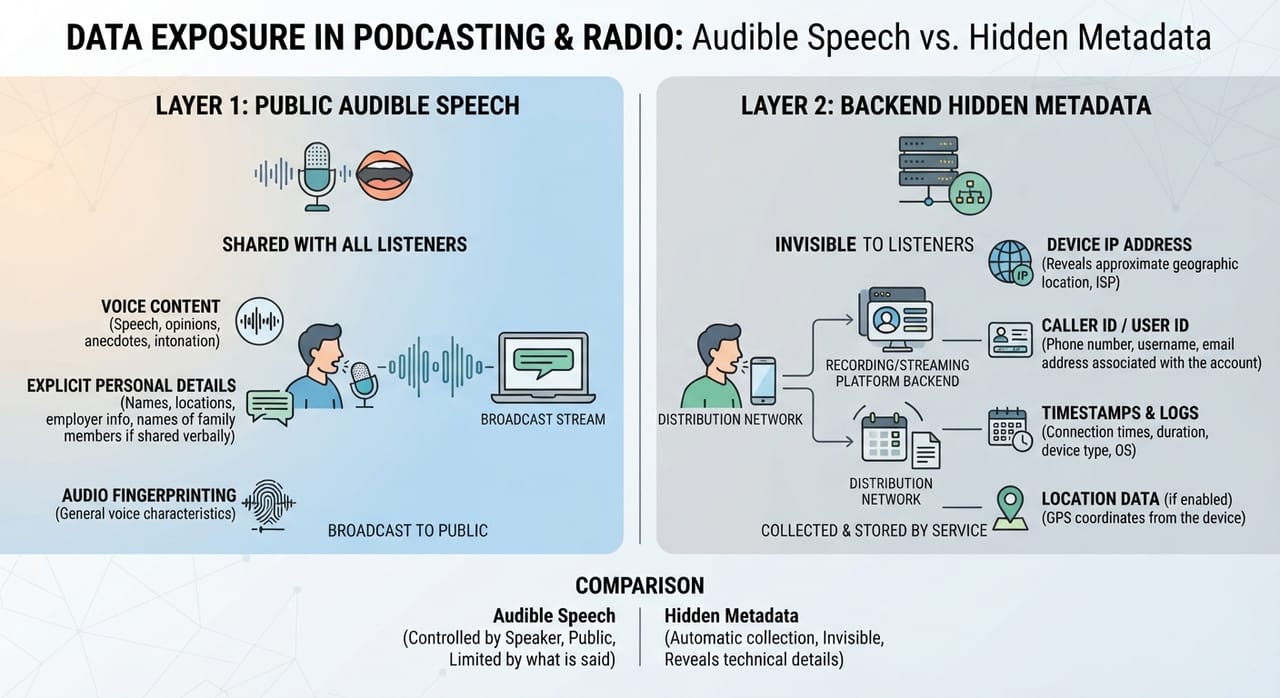
Participants often focus exclusively on what they explicitly say on air. In reality, radio transmission and podcast distribution pipelines collect your personal information across two distinct layers.
Public Audio Data: Voice Biometrics, Personal Details, and AI Search Indexing
The primary data layer encompasses the complete audio stream, whether broadcast live or packaged into an episode file. Your voice carries unique biometric characteristics; even if you omit your legal name, acquaintances, colleagues, or family members can readily recognize you by your cadence, tone, and speech mannerisms.
Seemingly harmless details such as your residential district, occupation, former employer, or marital status can be pieced together to construct a complete Personally Identifiable Information (PII) profile. Furthermore, most modern podcast hosting platforms utilize AI-powered tools to automatically convert spoken audio into written transcripts. Search engines like Google index these transcriptions in full. If you utter your real name or sensitive information, that text will appear directly in public Google search results.
Backend Technical Data: Caller ID, IP Addresses, and Hosting Analytics
The secondary data layer operates entirely behind the scenes. When you dial into a live radio show, the station’s private branch exchange (PBX) system logs your phone number, cellular network location, and subscriber identity, displaying it directly on the Call Screener's dashboard.
If you record a podcast via web-based remote studios (such as Riverside, Zencastr, or Zoom) or submit a story via web forms, hosting servers record your IP address, hardware specifications, and geographic location. Commercial networks and podcast hosting infrastructures (such as Captivate or Global) collect this contact metadata to power audience analytics or share aggregated insights with event sponsors.
Live Radio vs. On-Demand Podcasts: Risk Levels and Data Permanence
The distribution environment directly dictates the lifespan and retrievability of your disclosed information.
Comparison Factor | Traditional Radio (Live Broadcast) | On-Demand Podcasts |
|---|---|---|
Storage Nature | Ephemeral (broadcast once over analog radio frequencies) | Permanent (stored indefinitely on RSS feeds and cloud networks) |
Editing Capability | None (transmitted in real time) | High (producers can redact slips of the tongue prior to publication) |
Distribution Scope | Geographically restricted to local transmitter range | Global (downloadable to personal devices or embeddable across websites) |
Search Indexing | Low (unless re-packaged into web clips or YouTube videos) | High (indexed by Google across both audio and AI-generated transcript text) |
Post-Release Control | Extremely difficult to retract once airwaves transmit | Flexible (guests can request episode takedowns or audio re-uploads) |
Personal Data Exposure Risk Matrix Across Broadcasting Channels
The matrix below outlines specific categories of personal data, real-world exposure vectors, and recommended control actions:
Information Category | Real-World Exposure Channel | Risk Severity | Recommended Control Action |
|---|---|---|---|
Legal Name / Alias | Spoken on air, published in Show Notes or episode summaries | Moderate | Request a pseudonym or use a first-name-only protocol |
Phone Number | Visible on the Call Screener’s software interface | Low (rarely read aloud on air) | Use a VoIP number or dial with Caller ID hidden |
Specific Location | Hosts reading town names, interactive listener maps | High | Disclose only major metropolitan areas; omit neighborhoods |
Email Address | Story submission forms, newsletter sign-ups | Moderate | Use a secondary alias email dedicated solely to public submissions |
Controversial Views / Personal Scandals | Spoken dialogue during the segment | Critical | Omit third-party identifiers (e.g., company names, specific colleague titles) |
Social Media Handles | Tagged in promotional posts or episode announcement graphics | Moderate | Decline social media tagging if the topic is sensitive |
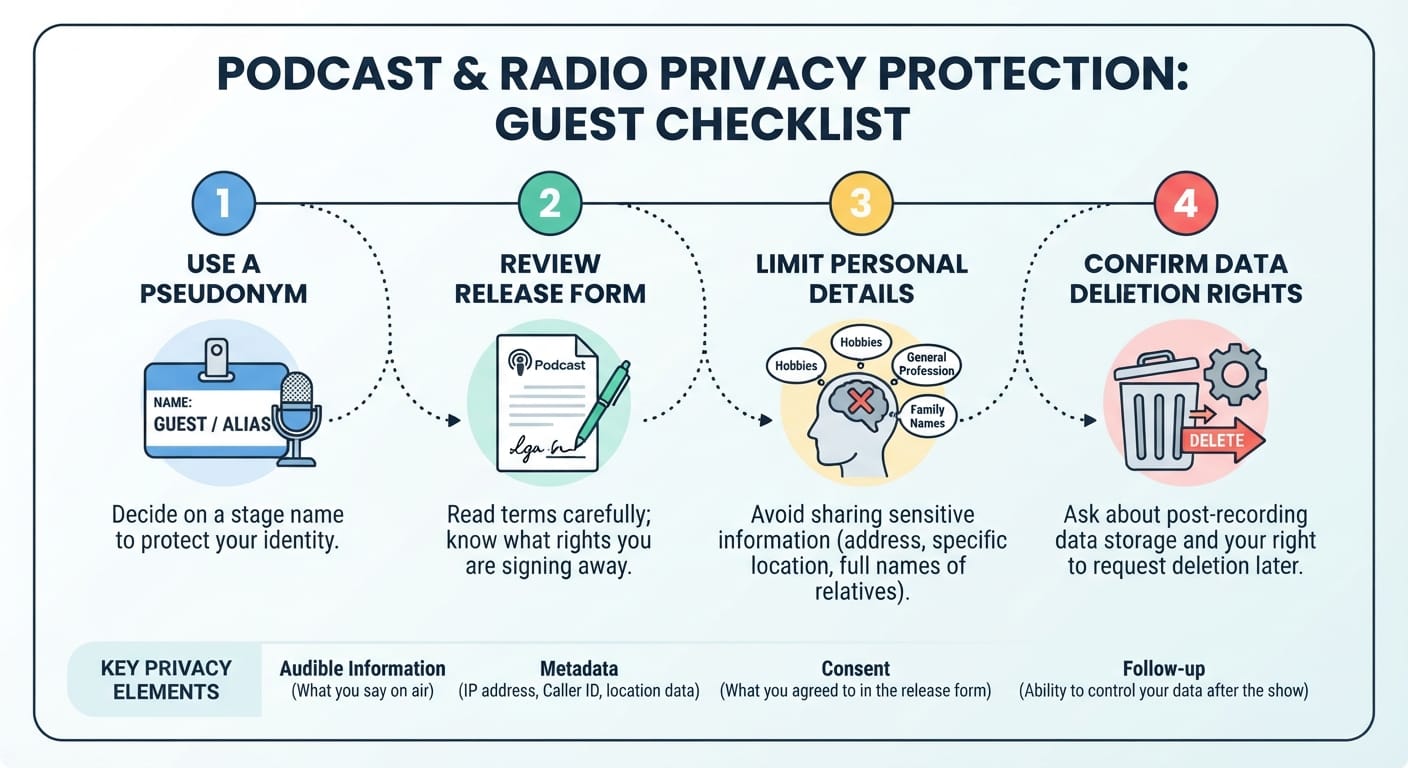
Privacy Protection Protocol Before and After Participating
To safeguard your identity while confidently contributing to audio programs, execute this four-step privacy management protocol:
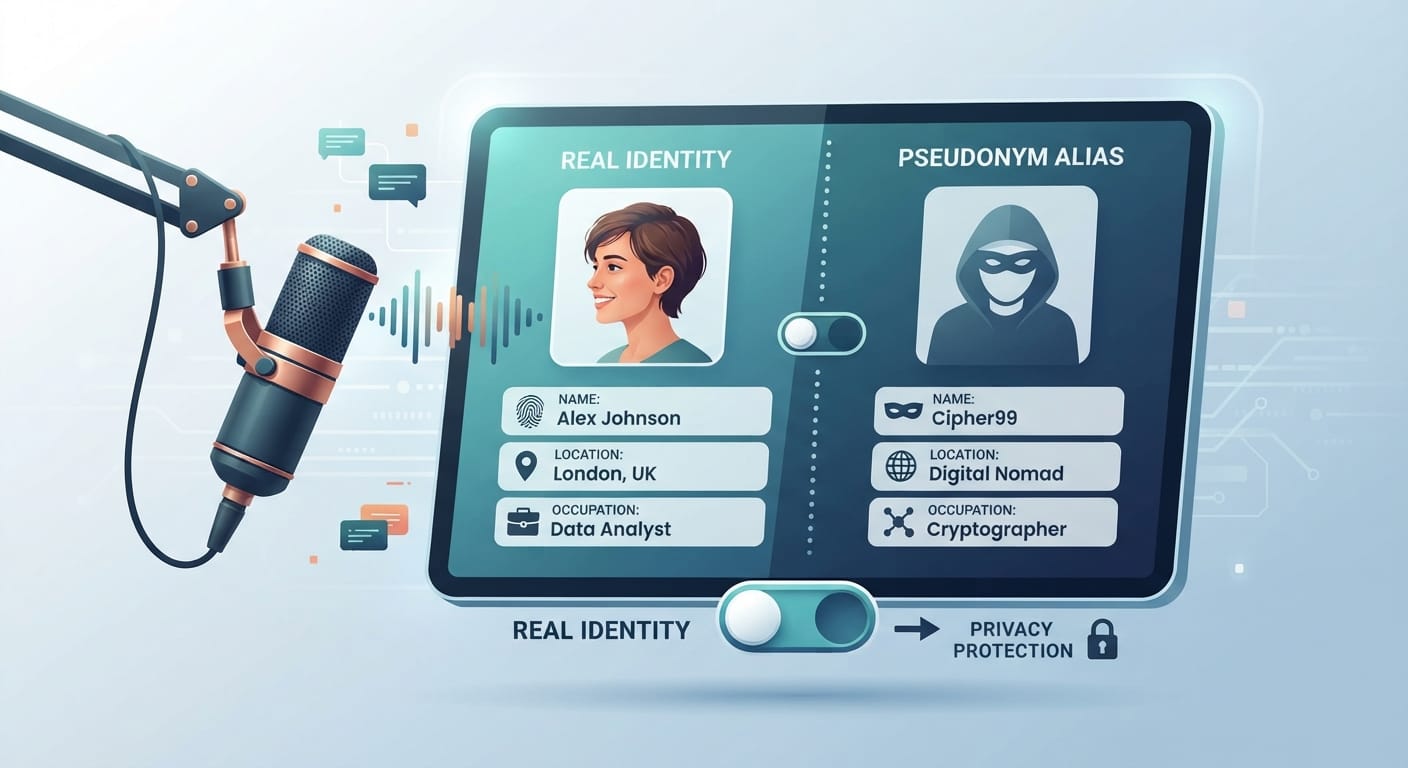
Step 1: Agreeing on Identity and Utilizing Pseudonyms
Explicitly inform the producer or host during pre-interview screening that you intend to use a pseudonym. Most radio stations and podcast channels routinely accommodate pseudonyms, particularly when discussing sensitive subjects like personal finance, mental health, or domestic relationships.
Step 2: Reviewing Guest Release Forms and Broadcast Terms
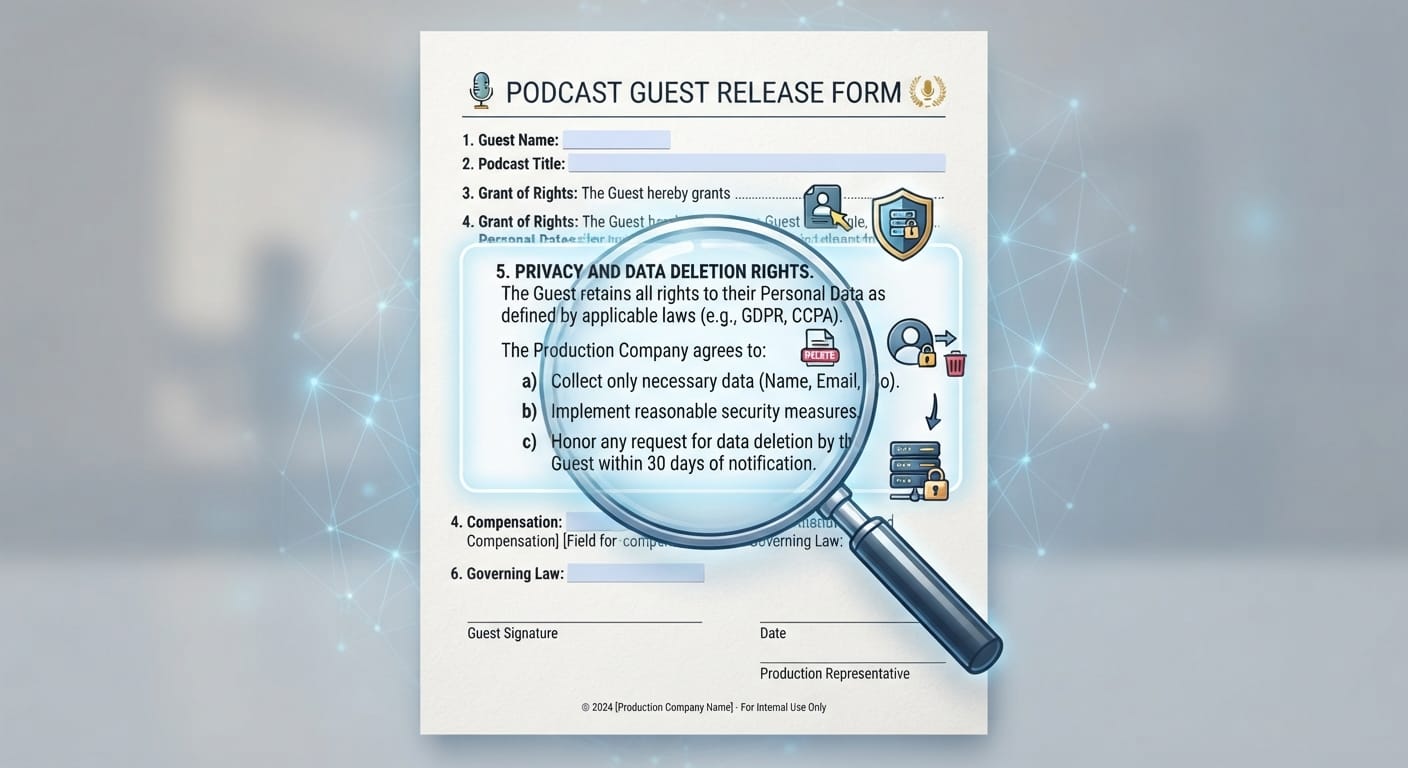
Prior to recording a professional podcast, producers typically ask guests to sign a Guest Release Form.
- Carefully inspect clauses governing copyright ownership and perpetual distribution rights.
- Request the insertion of a custom privacy clause: "The guest retains the right to request the redaction of specific sensitive audio segments prior to the official public release of the episode."
Step 3: Auditing Contact Information and Setting Up Secondary Emails
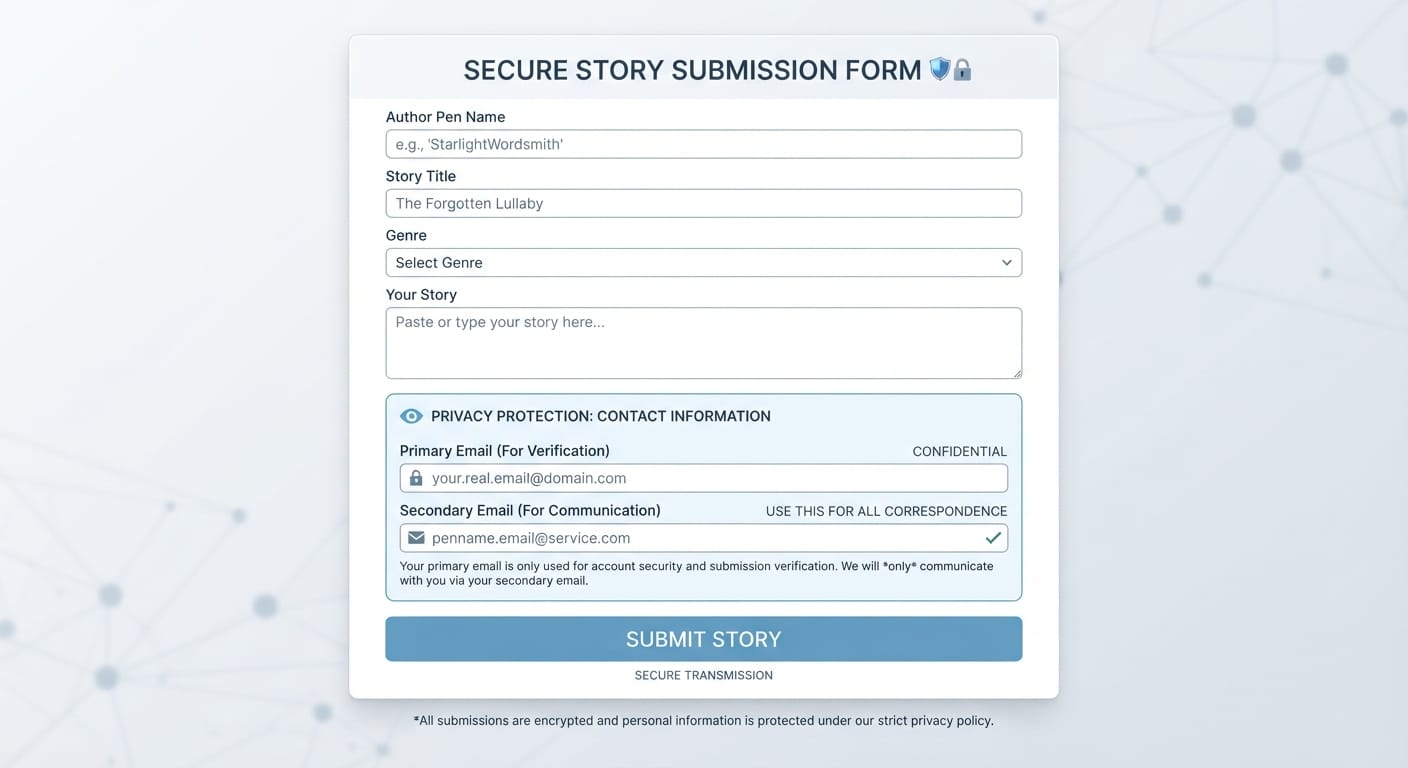
When registering for a show via online entry forms, use a secondary email address that does not contain your legal name or employer’s domain name. When calling into live radio, remind the Call Screener before going live that your phone number and precise location must remain confidential.
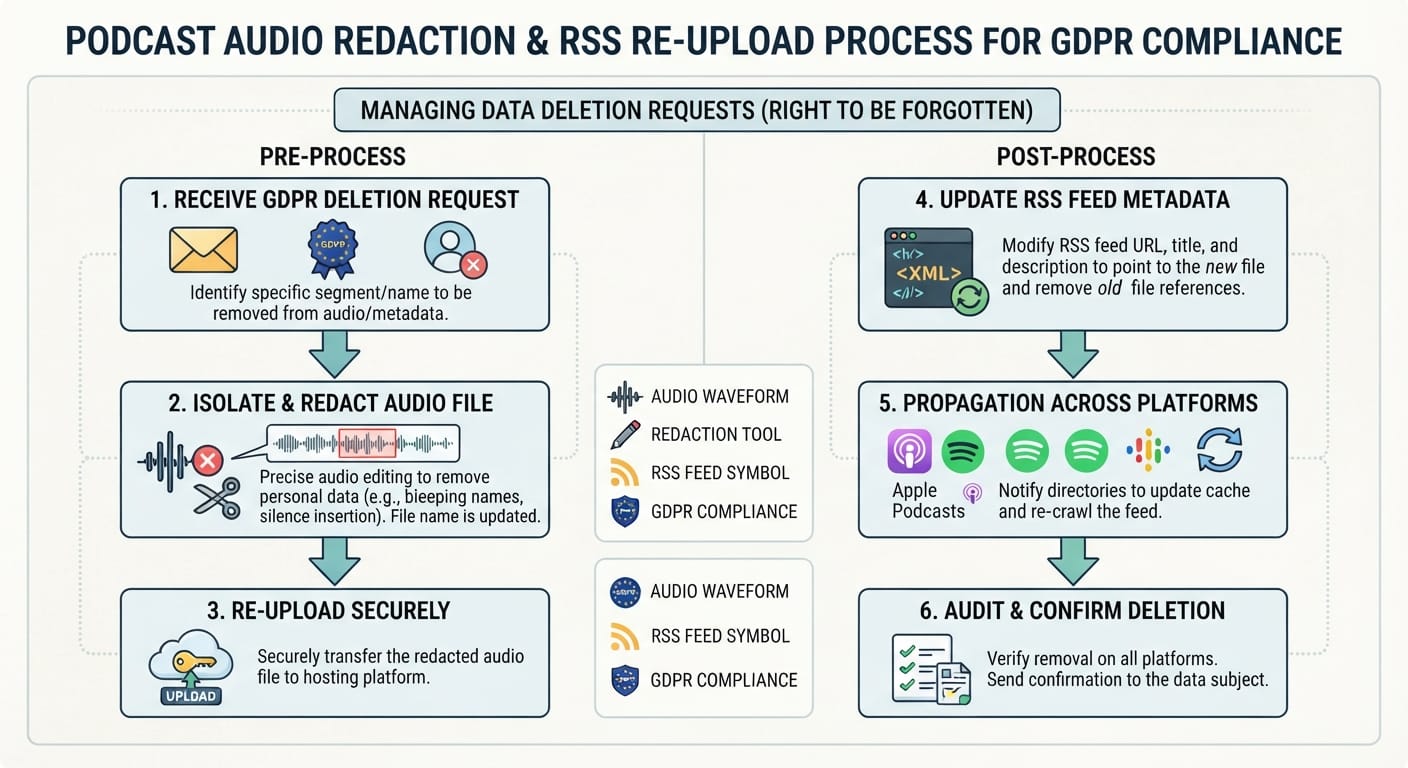
Step 4: Requesting Post-Broadcast Edits or Data Deletion (GDPR/CCPA Rights)
If a published episode creates unforeseen personal or professional repercussions, you can exercise formal legal requests under applicable data protection frameworks:
- Request Audio Redaction: Ask the producer to edit out the specific sensitive audio segment and re-upload the modified master file to the RSS feed.
- Request Personal Data Purging: Submit a formal request demanding the deletion of your email address, phone number, and correspondence logs from the station's internal databases, adhering to their published Privacy Policy.
FAQ
1. Can I legally demand the removal of a published podcast episode if I change my mind?
This depends on the initial agreement (Guest Release Form). Technically, producers can unpublish an episode from their RSS feed at any time. However, if you signed a contract granting unconditional, perpetual broadcast rights, the producer is not legally obligated to take down the episode simply because you changed your mind.
2. Is using a pseudonym enough to guarantee complete anonymity?
No. If your story includes hyper-specific contextual details such as explicit workplace events, unique timelines, or identifiable third parties acquaintances can easily deduce your identity. Additionally, voice cadence itself remains an accurate biometric identifier.
3. Do radio stations have the right to share my phone number with third parties?
Reputable stations commit to keeping caller contact details private. However, in sponsored contests or giveaway segments, your contact details may be shared with co-sponsors under the competition's terms and conditions. Always review the station's public Privacy Policy before participating in giveaways.
4. Can Google search results expose what I said during a podcast recording?
Yes. Driven by AI auto-transcription tools, podcast audio is regularly converted into text and indexed by Google's web crawlers. If you speak sensitive personal information on air, those statements can easily surface in public web searches.